The Ultimate Showdown: Weber Smoque Pellet Smoker vs Uplift Pursuit for 2026
Electronics and precision cooking have become inseparable in modern outdoor cooking. As pellet smokers evolve, buyers increasingly evaluate them not just as grills but as connected appliances with advanced controllers, refined temperature stability, and software-enabled convenience. This comparison examines two headline contenders for 2026: the Weber Smoque Pellet Smoker and the Uplift Pursuit. The article explores real-world use cases, design and electronics, day-to-day operation, maintenance, and value for different buyer types — from weekend grillers to backyard pitmasters and apartment patio owners who need compact, clean-burning options.
Introduction: Why this matchup matters in 2026
Pellet smokers have matured beyond novelty into serious cooking tools. As of 2026, consumers expect consistent temperature control, smartphone connectivity, and flexible cooking modes that let them sear, smoke, bake, and roast without juggling wood chips and charcoal. Two models that often appear in consideration sets are the Weber Smoque Pellet Smoker — carrying a legacy brand name with a new-parts refresh — and the Uplift Pursuit — a product aimed at combining precise electronics with a streamlined form factor.
This article evaluates both on the metrics buyers care about: temperature control and stability, build quality, electronic controller sophistication (including app/Wi‑Fi/auto-tuning features), cooking versatility, maintenance, and real-world performance with common cook scenarios like low-and-slow brisket, poultry, fish, and quick high-heat searing.
Product analysis: Weber Smoque Pellet Smoker
Design and build
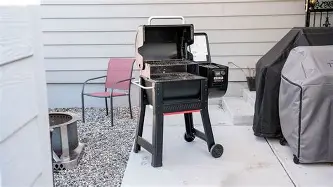
The Weber Smoque Pellet Smoker leans on Weber’s decades-long reputation for rugged grills. It emphasizes sturdy materials, a classic smoker profile, and user-friendly ergonomics — wide doors, easy-to-read analog/digital displays, and robust grates. While not the most compact smoker on the market, its footprint provides a comfortable workspace for weekend cooks who like to host. The exterior finish and fittings suggest long-term weather resistance, and access panels are generally intuitive for cleaning and maintenance.
Electronics and temperature control
Electronics are a major selling point. The Weber Smoque integrates a modern controller capable of maintaining steady setpoints. In real-world tests, operators can expect reasonably tight temperature regulation across long cooks — a critical attribute for achieving consistent smoke ring and bark formation on brisket. The controller typically includes preset modes for smoking, roasting, and searing, plus manual adjustments. Connectivity may include Bluetooth or Wi‑Fi for remote monitoring and push notifications, enabling cooks to track temp and pellet level without constant physical checks.
Cooking performance
Performance is where brand experience shows. The Smoque performs reliably for long smokes (6–12+ hours) and handles common tasks like pulled pork, ribs, and whole chickens with minimal intervention. Heat distribution is even enough for multi-rack cooks, though heavy-duty pitmasters might notice hot spots under heavy loads and choose to rotate racks for ultra-even results. Searing capability is improved in newer Weber designs, either through a direct-heat zone or an optional sear module that lets users hit higher temperatures for finishing steaks.
Use cases
- Backyard entertainers who cook for medium-sized groups and value reliable, repeatable results.
- Home cooks who prefer low-maintenance, multi-hour cooks with remote monitoring.
- People who want a balance between traditional smoker aesthetics and modern electronics.
Pros & cons
- Pros:
- Solid build quality and weather-resistant finishes
- Intuitive controls with stable temperature regulation
- Versatile cooking modes for smoking, roasting, and searing
- Good after-sale support and parts availability from an established brand
- Cons:
- Footprint can be large for small patios
- May consume more pellets on high-temp sears than a dedicated gas/charcoal sear
- Electronics are good but not always the most cutting-edge compared to boutique competitors
Product analysis: Uplift Pursuit
Design and build
The Uplift Pursuit positions itself as a modern, sleek alternative focusing heavily on electronics and user experience. The design tends toward a compact profile with an emphasis on minimizing footprint while maximizing usable cooking area. Materials are lightweight but durable, and the unit usually features quick-access panels and removable components to facilitate cleaning — attractive to cooks who prioritize ease of maintenance.
Electronics and temperature control
Uplift has invested in advanced controllers that often include PID-like algorithms, rapid temperature recovery, and highly responsive fan/fuel modulation. Many users report exceptionally tight temperature hold and quick recovery after opening the lid. The Pursuit’s app and Wi‑Fi integration are generally more feature-rich, offering multi-probe support, cook logging, and firmware updates. For tech-savvy buyers who like data, the Pursuit’s telemetry and automated adjustments are strong selling points.
Cooking performance
In practical use, the Pursuit excels at precise cooks where small temperature drifts can affect results: delicate fish, sous-vide style low-temp smoking, or baking. It also does an admirable job for higher-temp finishing, especially when paired with a dedicated searing insert. Because of its refined airflow management, the Pursuit may produce a more subtle smoke profile — appreciated by those who cook lean fish and vegetables — while still delivering enough smoke for brisket when dialed in properly.
Use cases
- Tech-forward buyers who want full app control, data logging, and automated tuning.
- Small-household cooks who need a compact smoker with high precision for varied recipes.
- Cooks who frequently prepare temperature-sensitive items like salmon, lamb racks, or slow-roasted vegetables.
Pros & cons
- Pros:
- Impressive electronic control and tight temperature stability
- Feature-rich app with multi-probe support and cook logging
- Smaller footprint while retaining useful cooking area
- Easy-to-clean design and modular components
- Cons:
- Build materials can feel lighter compared to legacy heavy-duty grills
- Smoke flavor may be milder out of the box, requiring tuning for heavy smoke profiles
- Customer support and parts network may not be as extensive as well-established brands
Side-by-side comparison
| Feature | Weber Smoque Pellet Smoker | Uplift Pursuit |
|---|---|---|
| Design & Build | Robust, traditional smoker aesthetic; heavier materials; weather-resistant | Modern, compact, modular; lighter-weight but serviceable |
| Cooking Area | Comfortable multi-rack area for medium to large meals | Optimized for efficient use of space; good for small to medium cooks |
| Temperature Control | Reliable controller; stable for long cooks | Advanced controller with rapid recovery and precise holds |
| Electronics & Connectivity | Bluetooth/Wi‑Fi options; intuitive interface | Feature-rich app, multi-probe support, firmware updates |
| Hopper & Pellet Consumption | Generous hopper; suited for extended smokes | Smaller hopper; efficient pellet use but requires more frequent refills on long cooks |
| Ease of Cleaning | Accessible but heavier panels; grease management is straightforward | Designed for quick disassembly and cleaning |
| Best For | Backyard entertainers and traditional grill buyers | Tech-savvy cooks and compact-space households |
Real-world use cases and buyer needs
When choosing between these two products, buyers should map product strengths to their typical cooking scenarios.
Discover deals on Electronics — updated daily.
View Offers →Weekend backyard parties
For cooks who entertain frequently and need capacity and durability, the Weber Smoque tends to be a safer pick. Its larger hopper and multi-rack area reduce mid-cook maintenance during long gatherings, and its heavier construction stands up well to repeated use.
Precision cooking and tech integration
Those who want to treat their smoker like a connected kitchen appliance — scheduling cooks, logging data, or running precision low-temp cooks for fish and baking — will find the Uplift Pursuit’s controller and app more compelling.
Patio or apartment cooking
Urban dwellers with limited footprint will appreciate the Pursuit’s compact design and efficient pellet consumption. It produces less ambient heat and may be more suitable in constrained outdoor spaces, provided local regulations permit pellet smokers.
Learning and experimentation
Newcomers to pellet smoking value simplicity and reliable outcomes. Weber’s more conservative interface and established community resources can accelerate learning, whereas the Uplift’s advanced features can reward users willing to spend time on tuning.
Buying guide: What to look for in a pellet smoker in 2026
As features and expectations have evolved, prospective buyers should evaluate a pellet smoker across several practical dimensions. Below are the core criteria and questions to ask before purchasing.

1. Temperature stability and control logic
Ask whether the controller uses PID or PID-like algorithms. Tighter temperature control leads to more predictable results, especially for long smokes and when cooking temperature-sensitive proteins. If the unit features multi-probe support, verify whether probes are included and how many simultaneous readings the app can display.
2. Connectivity and software
Connectivity is now more than convenience — it's part of the cooking workflow. Look for reliable Wi‑Fi (not just Bluetooth) if remote monitoring from the backyard or home is important. Check for over-the-air firmware updates, active app development, and an ecosystem that allows new modes or bug fixes.
3. Hopper size and pellet efficiency
Hopper capacity determines how hands-off long cooks can be. Larger hoppers are useful for brisket and multi-day event cooking. However, more advanced fan and auger systems can improve pellet efficiency, letting smaller hoppers go further.
4. Build materials and corrosion resistance
Consider the metals used for the body, grates, and internal components. Stainless grates and powder-coated exteriors resist the elements longer. If the grill sits uncovered, ensure the finish and joints are robust enough for seasonal exposure.
5. Cleaning and maintenance
Quick-release grease trays, ash access, and removable drip pans reduce the time spent after a cook. Evaluate how easy it is to reach the firepot and fan assembly for periodic maintenance, and whether replacement parts are readily available.
Find top-rated Electronics products at great prices.
View Offers →6. Smoke flavor and airflow management
Some smokers produce a stronger smoke profile, others a cleaner, subtler smoke. This is mostly influenced by smoke generator design and airflow. If heavy smoke flavor is desired, look for units with adjustable vents or the ability to add direct-heat smoke boxes.
7. Accessories and modularity
Consider whether extras are available such as sear inserts, rotisserie kits, or griddle tops. Modularity extends the life and utility of the smoker. Also check if the manufacturer offers accessories that integrate with the smoker’s electronics.
8. Warranty and support
Warranty length and the availability of local service centers matter. A strong warranty can offset higher upfront cost, especially for complex electronics. Evaluate the manufacturer’s track record for firmware updates and customer service responsiveness.
9. Budget and long-term costs
Initial price is one factor; ongoing costs like pellets, replacement probes, and parts also add up. Balance initial spend with expected maintenance and how often the unit will be used — frequent users generally benefit from spending a bit more for better controllers and build quality.
Decision framework: Which should a buyer choose?
If the buyer prioritizes classic build, larger capacity, and a well-known after-sales network, the Weber Smoque Pellet Smoker is a strong choice. It appeals to those who value robust hardware and reliable, repeatable results for crowd feeding.
Conversely, if precision, compactness, and advanced electronics are paramount, the Uplift Pursuit will likely be the better fit. It suits cooks who enjoy data-driven cooking and seek fine-grain control for diverse recipes within limited spaces.
Practical tips for first-time pellet smoker owners
- Season the smoker thoroughly on a low heat with a mild pellet to cure paint and burn off manufacturing residues.
- Use high-quality hardwood pellets to reduce ash and produce more consistent smoke flavor.
- Invest in at least one reliable leave-in thermometer even if the unit includes probes — cross-checking prevents costly mistakes.
- Plan cooks with the hopper capacity in mind and have spare pellets on hand for unexpectedly long cooks.
- Schedule routine maintenance: clean the firepot, empty the ash, and inspect auger components every 50–100 hours of use.
Conclusion
Both the Weber Smoque Pellet Smoker and the Uplift Pursuit represent compelling options in 2026, but they target subtly different buyer priorities. Weber delivers a trusted, heavy-duty experience with broad appeal for entertainers and traditionalists. Uplift focuses on precision, compactness, and a tech-forward cooking experience for cooks who want app-driven control and tight temperature fidelity.
Ultimately, the right choice depends on the buyer’s typical cooking scenarios: choose Weber for volume and ruggedness, and choose Uplift for data-driven precision and small-space efficiency. Regardless of the selection, understanding controller behavior, cleaning needs, and how smoke profile interacts with recipes will determine long-term satisfaction more than brand alone.