Spec Battle: Nothing Ear 3 vs Sony Linkbuds Open — Is It Worth Upgrading?
When shoppers weigh an upgrade to new earbuds, the decision rarely rests on a single spec sheet line. Fit, use case, comfort, sound signature, and daily battery behavior matter just as much as numbers. This comparison puts two very different approaches to modern true wireless audio head-to-head: the in-ear, feature-forward Nothing Ear 3 and Sony’s open-ear Linkbuds Open. One prioritizes sealed isolation, active noise control and punchy delivery; the other embraces awareness, comfort and an “always-on” listening philosophy.
Introduction: two philosophies, one question
The Nothing Ear 3 embodies the current trend toward powerful active noise cancellation (ANC), personalized sound and bold design. Sony’s Linkbuds Open takes a contrarian route: an open-ear, ventilated driver that keeps the ears free to hear the environment, trading isolation for safety and long-wear comfort. For buyers deciding whether to upgrade from older models, or to choose between the two, the practical differences—not just raw specs—will determine satisfaction.
This article evaluates both products across real-world dimensions that buyers typically care about: comfort and fit, sound for different genres and activities, ANC/ambient behavior, battery and day-to-day usability, call quality, software and ecosystem, and value for money. The goal is to make the trade-offs clear so the right buyer can choose confidently.
Detailed product analysis
Nothing Ear 3 — the sealed, feature-rich contender
The Nothing Ear 3 positions itself as a premium in-ear true wireless option with a strong focus on noise control, bass presence and an attention-grabbing aesthetic. In typical use, it aims to deliver a tight, immersive listening experience for commuting, noisy offices and focused listening sessions.
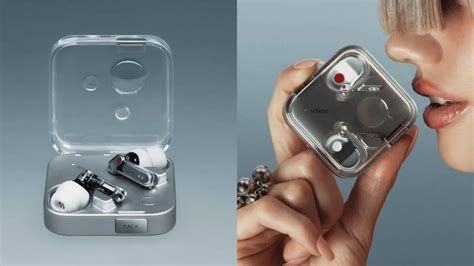
Real-world strengths:
- Noisy environments: The Ear 3’s ANC is designed to reduce low-frequency rumble and mid-frequency chatter, making it a solid choice for subway rides, airplanes and open-plan offices.
- Isolation and immersion: The sealed fit means music feels more present and bass-driven genres like electronic, hip-hop and pop benefit most.
- Feature set: Typically includes a companion app for EQ, ANC modes and firmware updates—useful for buyers who like to tune sound or add features over time.
- Secure fit for workouts: In-ear tips provide a secure seal that generally stays put during movement, assuming a good tip fit.
Common limitations:
- Ear fatigue for some users: Sealed in-ear designs can feel intrusive during long sessions, especially for people who dislike tip-based isolation.
- Less situational awareness: ANC and isolation reduce environmental cues—poor choice for urban runners or cyclists who need to hear traffic.
- Fit variance: As with all tip-based earbuds, success depends on finding the right tip size and achieving a good seal.
Sony Linkbuds Open — the open-ear alternative
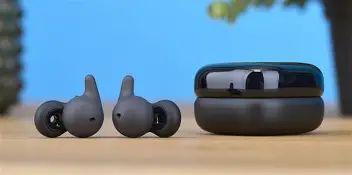
Sony’s Linkbuds Open follows an open-ear paradigm that keeps the ear canal largely unblocked. Instead of shutting the listener off, this design aims for convenience and safety: users can hear announcements, conversations, and traffic while still listening to music or podcasts.
Real-world strengths:
Find top-rated Audio & Headphones products at great prices.
Shop Amazon →- Situational awareness: The open design is ideal for people who need to stay aware—parents, office workers who need to overhear colleagues, or city cyclists.
- Comfort for long wear: Without in-ear tips sealing the canal, many users report more comfort across multihour sessions and less ear pressure.
- Natural presentation: The soundstage tends to feel airy and non-invasive, which works well for spoken-word content and lighter music genres.
- Safety-focused use cases: Great for commuting in mixed traffic, office contexts and activities where hearing the environment is beneficial.
Common limitations:
- No passive isolation: In loud environments the open design cannot block external noise; this limits usefulness on planes or noisy trains.
- Lower perceived bass: Without a sealed cavity, bass impact is typically reduced—electronic and bass-heavy tracks can feel underwhelming.
- Not ideal for focused listening: For listeners who want immersive audio, the open design will disappoint.
Comparison table
| Category | Nothing Ear 3 | Sony Linkbuds Open |
|---|---|---|
| Design & Fit | In-ear, tip-based seal; bold transparent aesthetic; secure for active use | Open-ear, ventilated driver; lightweight and unobtrusive; prioritizes comfort |
| Isolation / ANC | Active noise cancellation and passive isolation; effective in many noisy scenarios | No ANC; designed to maintain environmental awareness |
| Sound signature | Punchy, bass-forward when sealed; customizable EQ via app | Airy, natural midrange; reduced bass impact due to open design |
| Use case | Commuting, flights, focused listening, gym | Office, walking, safety-critical outdoor use, long listening sessions |
| Battery & daily use | Designed for multi-hour use with case recharges; good daily endurance | Designed for long comfortable wear; battery life optimized for continuous use |
| Call quality | Engineered to isolate and improve mic pickup in moderate noise | Open design picks up more ambient noise; call clarity depends on environment |
| App & features | Companion app with EQ, ANC modes and firmware updates | Sony app with sound personalization and utility features; fewer ANC controls |
| Best for | Users who want immersive sound and noise control | Users who prioritize awareness and comfort over isolation |
Pros & cons
Nothing Ear 3 — pros
- Strong isolation and active noise cancellation for noisy commutes and flights
- Immersive, bass-forward sound that suits modern pop, electronic and hip-hop
- Secure in-ear fit for workouts and movement
- Feature-rich companion app for EQ and mode controls
Nothing Ear 3 — cons
- In-ear seal can be fatiguing over long listening sessions for some users
- Less safe for outdoor activity where hearing surroundings matters
- Fit success depends on tip choice—some users need trial-and-error
Sony Linkbuds Open — pros
- Exceptional situational awareness—can hear conversations and traffic
- Very comfortable for extended wear; minimal ear pressure
- Natural, open presentation that suits podcasts and acoustic music
- Ideal for hybrid work environments where quick conversations matter
Sony Linkbuds Open — cons
- Not suitable for loud, noisy environments—no passive or active isolation
- Bass lovers may find the low end lacking compared with sealed buds
- Call quality can suffer in busy outdoor settings due to ambient pickup
Real-world use cases and buyer profiles
Matching the product to daily habits reduces buyer regret. Below are common scenarios and which earbud is likely the better fit.
Daily commuter on public transit
A commuter who faces loud buses, trains and platforms benefits from strong ANC and passive isolation. The Nothing Ear 3 better addresses the need to block low-frequency rumble and loud announcements so music or audiobooks remain audible without cranking volume.
City walker or cyclist who needs safety
Someone who walks or cycles in urban traffic should favor situational awareness. The Linkbuds Open allows hearing approaching vehicles and announcements, lowering the risk that comes with fully sealed earbuds.
Office worker in a hybrid environment
For a worker who alternates between focused work and quick desk-side conversations, the choice depends on office noise. If open-plan chatter is frequent, Nothing Ear 3 helps with concentration. If the office culture requires rapid overhearing and quick interactions, Linkbuds Open reduces the friction of removing earbuds to speak.
Fitness and gym use
For sweaty, dynamic workouts, in-ear tips usually stay put better—Nothing Ear 3 will be more secure. However, for outdoor exercise where hearing traffic is essential, Linkbuds Open may be safer despite a potentially less secure physical fit.
Long listening sessions and sleep-friendly wear
Users who wear buds for hours—during study, long flights, or while working—often prioritize comfort above all. Linkbuds Open’s non-sealing approach reduces pressure and ear fatigue, making them attractive for marathon listening sessions, assuming the environment isn’t extremely noisy.
Looking for the best Audio & Headphones deals on Amazon?
View Offers →Buying guide: what to consider before upgrading
Upgrading earbuds is as much about changing how one uses them as it is about incremental improvements in sound or battery. The following checklist helps clarify the decision.
- Primary environment: Are most listening sessions noisy or quiet? If noisy, ANC and sealing are strong priorities. If quiet or safety-sensitive, open-ear designs may be better.
- Comfort threshold: Does the user tolerate in-ear pressure for hours, or do they prefer minimal intrusion? Try extended wear before committing where possible.
- Music preferences: Bass-heavy listeners typically prefer sealed earbuds for better low-frequency response. Acoustic, classical and spoken-word fans might prefer the naturalness of open designs.
- Call and meeting needs: Frequent outdoor calls favor sealed mics and ANC; quiet indoor calls can work well with open-ear buds.
- Battery behavior expectations: Check real-world battery tests and consider whether case top-ups are needed during a workday.
- Feature importance: Are app-based EQs, multipoint Bluetooth, spatial audio, or advanced codec support must-haves? Confirm both models support the required features.
- Test for fit and sound: Where possible, audition both in the store or through generous trial periods—perceived comfort and sound differ greatly between individuals.
- Safety considerations: For cycling, running, or urban commuting, favor designs that keep users aware of hazards.
Practical tips for maximizing either choice
Whether choosing sealed ANC buds or open-ear drivers, small habits improve the day-to-day experience:
- Use the companion app to tune EQ and noise-management modes to the environment; many grievances come from out-of-the-box flat settings.
- For in-ear buds, try multiple tip sizes and materials—memory foam versus silicone often changes comfort and bass response.
- When using open-ear buds in noisy spaces, avoid max volume; instead, choose quieter listening content (spoken-word or light indie) to preserve clarity.
- Care for earbuds and charging cases—cleaning tips and vents will extend life and maintain sound quality.
Is it worth upgrading?
The answer depends on what “upgrading” aims to solve. If the current earbuds lack effective ANC or fail to isolate in noisy commutes, moving to a sealed model such as the Nothing Ear 3 is a meaningful upgrade that improves concentration, perceived detail and listening satisfaction for modern, bass-forward tracks. Conversely, if discomfort, ear fatigue, or the need to remain aware of surroundings are the main issues, switching to an open-ear design like the Sony Linkbuds Open can feel like a transformational upgrade—one that changes behavior rather than merely improving a spec.
For many buyers, the decision is not purely about which product is superior on paper but about which aligns with daily routines. The Nothing Ear 3 upgrades the listening experience by offering immersion and control. The Linkbuds Open upgrades daily life by allowing safe, comfortable, and frictionless listening in contexts where awareness matters.
Conclusion
Nothing Ear 3 and Sony Linkbuds Open represent two valid, but distinct, approaches to earbuds. The Nothing Ear 3 is the natural choice for users who prioritize isolation, ANC and a music-first, immersive experience. The Sony Linkbuds Open suits those who prioritize comfort, safety and the ability to remain connected to the environment while listening. Rather than declaring a single winner, the wiser question is which upgrade will remove the biggest friction in a buyer’s routine. Select the model that solves the daily problem—noise, comfort, awareness or sound preference—and the upgrade will clearly be worth it.