Spec Battle: Alienware 16 Area 51 Gaming Laptop vs Linksys Re7350 — Is It Worth Upgrading?
Introduction
When gamers talk about "upgrading," the conversation usually centers on raw horsepower: a faster GPU, more RAM, a higher-refresh display. Yet for many real-world gaming sessions the limiting factor is not the laptop's frame rate but the network: latency, packet loss, and inconsistent Wi‑Fi coverage. This article pits the Alienware 16 Area 51 gaming laptop — a high‑end, performance‑first machine — against the Linksys RE7350 range extender — a budget‑conscious networking accessory aimed at improving wireless coverage. Rather than a literal apples‑to‑apples spec comparison, this piece asks the practical question many buyers face: if a household is deciding where to spend upgrade dollars for a better multiplayer and streaming experience, which upgrade delivers the most noticeable improvement in daily use?
Quick Product Overviews
Alienware 16 Area 51 Gaming Laptop
The Alienware 16 Area 51 is positioned as a desktop‑class gaming laptop with a focus on raw computing and graphics power. Typical configurations put it in the category of premium 16‑inch gaming systems with options for high‑core‑count CPUs, powerful discrete GPUs, fast NVMe storage, generous RAM capacities, and high refresh‑rate displays. The machine targets players who want strong single‑machine performance for esports, AAA titles, content creation, or streaming without delegating heavy workloads to a desktop.
Buyers typically care about frame rates at competitive resolutions (1080p/1440p), thermal headroom for sustained loads, keyboard feel for long sessions, battery behavior when unplugged, and the presence of wired networking (Ethernet) and fast Wi‑Fi for lower latency.
Linksys RE7350
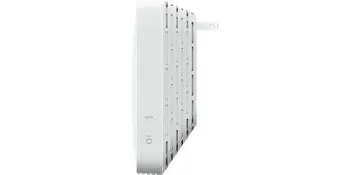
The Linksys RE7350 is a compact Wi‑Fi range extender intended to plug gaps in wireless coverage. As a network accessory it aims to boost signal strength at the edges of a home network so devices receive a stronger, more stable wireless link. Range extenders of this class are often marketed around simple setup, a small footprint, and compatibility with existing routers. For many users, the promise is better in‑room performance for streaming, web browsing, and casual gaming without running Ethernet.

Buyers typically care about supported Wi‑Fi standards (e.g., Wi‑Fi 6/AX), maximum theoretical throughput (AX1800, AX3000, etc.), ease of placement and setup, whether the extender supports Ethernet backhaul, and whether it introduces added latency or halves throughput due to single‑radio repeating.
How Each Upgrade Affects Real‑World Gaming
What the Alienware 16 Improves
Upgrading to or investing in a high‑end gaming laptop like the Alienware 16 directly improves what happens on the client device. Benefits are tangible in:
- Frame rates and visual fidelity: Higher GPU performance enables higher settings and higher refresh rates, which is valuable for competitive players who rely on smooth motion and quick target acquisition.
- Local streaming and content creation: Faster CPUs and NVMe storage speed up video encoding, game capture, and editing workflows, reducing render times and stream‑encoding CPU overhead.
- Multitasking: More RAM and cores help keep Twitch/Discord/OBS/Chrome open without stuttering during gameplay.
- Connectivity features: a modern gaming laptop often includes Wi‑Fi 6 (or better) and a wired Ethernet port, making it capable of low‑latency connections when the network is adequate.
However, no matter how powerful the laptop is, online responsiveness also depends on the network path to the game servers. If packet loss or high ping is caused by weak Wi‑Fi or a congested router, spending on a faster GPU won't solve it.
Discover deals on Laptops & Computers — updated daily.
Shop Amazon →What the Linksys RE7350 Improves
A network extender like the RE7350 targets the other half of the equation: the quality of the device's connection to the home network. Practical gains include:
- Improved wireless signal in dead zones: Devices that once had one or two bars can show stronger link rates, translating into fewer retransmits and smoother streaming.
- More stable connections: Reduced packet loss at the client side when the extender is placed correctly between the router and the device.
- Convenience: The ability to avoid running Ethernet cables through the home; useful for renters or rooms far from the router.
That said, range extenders can introduce tradeoffs: some models halve throughput if they use the same radio to communicate upstream and downstream, and placement is crucial. Extenders rarely reduce Internet latency to game servers — they improve the link between device and router but cannot fix upstream ISP issues or congested game servers.
Detailed Analysis: Where Each Upgrade Delivers Value
Latency and Competitive Play
Competitive players care about ping more than raw FPS if frames are already above the display refresh rate. An Alienware 16 provides the client processing headroom to maintain high FPS, but the lowest possible ping typically comes from a wired Ethernet connection directly to the router or modem. If the laptop is used over Wi‑Fi and the home suffers from weak coverage, adding a Linksys RE7350 can lower the client's link latency and variance (jitter), which helps. If the laptop is already wired or sitting near a good router, the extender yields diminishing returns.
Bandwidth and Streaming
Streaming high‑bitrate content (e.g., 1080p60 or 4K) requires both local encoding capacity and steady upload bandwidth. The Alienware 16 provides encoding performance (software or hardware) and the ability to handle background tasks. The RE7350 can enable a stronger wireless link to support high upload rates when Ethernet is not available, reducing dropped frames in a live stream. However, an extender does not increase the ISP's upload speed — it only helps the link between the device and the home network.
Stability and Multi‑Device Homes
In households with many wireless devices (smartphones, IoT, cameras, tablets), overall Wi‑Fi congestion matters. A single extender can help in a specific room, but a mesh router system or a stronger primary router may be a better long‑term investment. The Alienware 16 benefits from stable local networks, but it cannot compensate for an overwhelmed router or poor WAN performance.
Portability and Use Environment
If the buyer travels frequently or attends LAN parties, upgrading the laptop is a mobile upgrade — performance follows the user. A range extender is a stationary purchase that only helps at home. Conversely, if the laptop is adequate for local gaming but Wi‑Fi coverage at home is unreliable, the RE7350 yields immediate home‑centric value.
Pros & Cons
Alienware 16 Area 51 — Pros
- Powerful CPU/GPU options for sustained high frame rates and demanding game engines.
- High‑refresh display options for smoother gameplay and competitive advantage.
- Large thermal design and upgradeable storage/RAM in many configurations.
- Good choice for content creators who need local encode and editing performance.
Alienware 16 Area 51 — Cons
- Price: high‑end components and premium chassis command a premium.
- Size and weight: less portable than thin‑and‑light gaming laptops.
- Battery life: powerful hardware commonly reduces unplugged endurance.
- Upgrading the laptop may be overkill if the user’s gaming issues are network‑related.
Linksys RE7350 — Pros
- Cost‑effective way to patch Wi‑Fi dead zones without running cable.
- Compact and easy to install — useful for renters or temporary setups.
- Can noticeably improve wireless link rates for devices stuck far from the router.
- Low power draw and small footprint.
Linksys RE7350 — Cons
- May reduce throughput compared to direct router connection depending on setup.
- Does not improve ISP speed or solve upstream latency outside the home network.
- Placement sensitive — poor placement can make performance worse.
- Single extender addresses coverage in one area; whole‑home problems may need mesh instead.
Comparison Table
| Category | Alienware 16 Area 51 (Laptop) | Linksys RE7350 (Range Extender) |
|---|---|---|
| Primary purpose | Local gaming performance, content creation, high FPS | Extend wireless coverage and strengthen client wireless link |
| Typical user benefit | Smoother visuals, faster rendering, multitasking | Fewer Wi‑Fi dead zones, steadier wireless connectivity |
| Effect on online latency | Indirect — reduces client-side frame time; needs good network for low ping | Can reduce local Wi‑Fi latency/jitter if placed properly |
| Mobility | Portable — performance wherever the laptop goes | Stationary — benefits only in the extender's coverage area |
| Cost considerations | High; premium hardware and features | Low to moderate; cheaper than a full router/mesh upgrade |
| Best for | Gamers who need desktop‑class performance in a single device | Homes with router coverage gaps where Ethernet is impractical |
| Limitations | Won't fix poor ISP or congested router issues alone | Won't increase ISP bandwidth; may halve throughput on some setups |
Buying Guide: Which Upgrade to Choose
Deciding whether to spend on a high‑end gaming laptop or a range extender depends on the user's current pain points. Use the checklist below to diagnose the most effective upgrade path.
Discover deals on Laptops & Computers — updated daily.
See Deals →Step 1: Identify the bottleneck
- Is gameplay choppy or stuttering even with high FPS? If local frame rate is the problem (low FPS), the laptop is the likely bottleneck.
- Is lag, rubber‑banding, or frequent disconnects the issue? If ping spikes and packet loss occur in specific rooms, the network is likely at fault.
- Do problems happen only when streaming or uploading? Verify ISP upload speeds — extenders won't increase ISP bandwidth.
Step 2: Run simple diagnostics
- Test with a wired Ethernet connection: if latency and stability improve dramatically, prioritize improving wired access or the home network.
- Move the laptop closer to the router temporarily: if performance improves, a Wi‑Fi coverage solution (extender or mesh) will help.
- Check in‑game FPS and resource usage: if GPU/CPU are pegged and temperatures are high, a laptop upgrade or settings tuning is warranted.
Step 3: Consider cost‑to‑benefit
- Small budget (under a few hundred dollars): a range extender or a better router often yields the most immediate improvement for multiple devices.
- Moderate budget: a mesh Wi‑Fi system yields broader, long‑term benefits across the household and is preferable to a single extender for whole‑home coverage.
- Large budget or need for mobility: a powerful laptop is a one‑time investment for both gaming and content work and will improve local performance independent of the home network.
Other factors to weigh
- Future needs: If the household plans many smart devices or 4K streams simultaneously, prioritize network infrastructure (mesh / higher‑end router) over a single extender.
- Wired options: If Ethernet can be run or a switch added, a wired connection to the Alienware 16 will almost always outperform wireless solutions for latency‑sensitive play.
- Space and permanence: Extenders are good for renters; a full router/mesh may be better for homeowners.
Practical Recommendations by Use Case
Solo competitive player in a small apartment
If the gaming device is close to the router and wired Ethernet is an option, prioritize the Alienware 16 only if local FPS needs improvement. If Wi‑Fi is marginal and Ethernet isn't practical, a small Wi‑Fi 6 extender like the RE7350 or a compact mesh node will deliver the best improvement in consistent play.
Streamer who records and streams from the same machine
Encoding and multitasking favor upgrading the laptop for hardware encoding performance and multi‑core CPU power. At the same time, ensure the home upload bandwidth and local wireless link are steady — an extender can complement the laptop if Wi‑Fi coverage is weak.
Family home with multiple users and dead zones
Spend on the network first. A single extender may work for one dead zone, but a mesh system often delivers longer‑term satisfaction for many users and devices. The laptop upgrade benefits only one user at a time.
Conclusion
The right upgrade is the one that addresses the current bottleneck. The Alienware 16 Area 51 is an excellent investment when the user needs local computational power: higher FPS, faster encoding, better multitasking, and a premium display are all benefits that improve gameplay and creative work on the machine itself. The Linksys RE7350 is a pragmatic, lower‑cost way to fix wireless dead zones and stabilize connections in specific rooms, which translates directly into fewer disconnects and reduced jitter for online play where wiring isn't possible.
For most households aiming to improve online gaming experience on a budget, fixing the network first yields broader returns: better Wi‑Fi helps every device. For a single user whose in‑game performance is limited by the laptop itself (low FPS, long render/encode times), a laptop upgrade provides immediate, device‑specific gains. In many cases the best approach is a combination: ensure a stable, low‑latency home network (via wired connections, a better router, or targeted extenders) and then invest in a capable gaming laptop to take full advantage of that improved connection.