Should You Buy the Srs Xb01 in 2026? A Deep Dive
I've been using the Sony SRS-XB01 for about eight months now, carrying it to cafés, kitchen counters, short hikes, and the occasional backyard get-together. It's tiny, cheap (at least when I bought it), and very easy to forget you're holding something electronic — until the music starts and the little speaker surprises you. In this article I want to share an honest, hands-on account of living with the SRS-XB01 in 2026: what still holds up, what feels dated, and who — if anyone — should consider buying one today.
Why I picked the SRS-XB01
My goal was simple: a pocketable, throw-and-forget speaker that I could use around the house and outdoors without worrying too much about scratches or knocks. I wasn't chasing audiophile fidelity; I wanted convenience, something that sounded better than my phone's speaker, and a battery that could get me through a few hours of listening. The SRS-XB01 was cheap, compact, and well-reviewed in previous years, so I decided to buy one and see how it handled real life rather than lab tests.
Design and build: small, friendly, and a bit dated
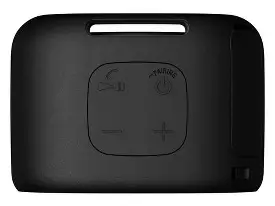
Out of the box the XB01 feels cheerful. It's really small — light enough to tuck into a jacket pocket — with a rubberized outer finish that resists fingerprints and adds grip. The size is genuinely its strongest appeal: I could clip it to a belt loop with a carabiner or set it on a bike rack and not worry about adding bulk. The loop for attaching a strap is practical and still useful in 2026 when compactness matters.
That said, the design does feel dated in two main ways. First, the charging port is micro-USB rather than USB-C. In 2026 that's noticeable: most of my other gadgets charge via USB-C, so I ended up keeping a separate micro-USB cable in my bag just for this speaker. Second, the controls are basic physical buttons — play/pause, volume, and power — which work reliably, but there’s no companion app or advanced settings. I appreciated the simplicity, but I also missed features modern mini speakers add, like in-app EQ presets or multipoint Bluetooth pairing.
Sound quality: impressive for its size, but not perfect
What I found was that the XB01 punches above its weight in the bass department for its form factor. Sony branded units with "Extra Bass" have historically emphasized punch, and the XB01 follows that trend: at moderate volume it delivers a surprisingly warm low end that makes electronic, pop, and hip-hop tracks sound fuller than I expected from a speaker this small. For podcasts and spoken word, the sound is perfectly serviceable.
However, the limitations become clear when you push the volume. At higher volumes the speaker starts to distort — mids get a little recessed and treble can become brittle. I noticed vocal clarity suffers when the bass is pushed hard, so tracks that rely on nuanced mids (acoustic singer-songwriter material, classical chamber pieces) don't come through as well as they do on a larger speaker.
Spatially, it's a mono speaker through a single driver, so you won't get any stereo imaging. For background music in a kitchen or small room, that's fine. For any serious music appreciation I switched to a bookshelf speaker or headphones. Still, for what it is — a pocketable, single-driver speaker — the SRS-XB01 gives very good value in sound-per-dollar and sound-per-size.
Real-world sound examples from my use
- Cooking and cleaning: I used the XB01 on my kitchen counter for about an hour at a time. It kept up with the noise of a blender or washing up, and the bass made dance tracks feel lively.
- Walking the dog: It was easy to clip on and play playlists. Outdoors, sound dissipates quickly — at a casual walking volume it's fine, but you won't fill a park with music.
- Small gatherings: For 4–6 people in a small living room it covered listening needs. At a lively backyard party with 10+ people, it felt underpowered and started distorting.
Battery life and charging—good, but not industry-leading
In my experience, the XB01's battery life is adequate for short outings but will not carry you through an entire day of heavy use. With mixed listening (podcasts, playlists) at moderate volume, I typically got around 4–6 hours per charge. If I turned it up louder, continuous playback dipped toward the lower end of that range. Charging via micro-USB took a couple of hours depending on the charger I used.
Discover deals on Audio & Headphones — updated daily.
See Deals →I appreciated that the speaker goes into a low-power standby when not connected, which helped conserve battery between uses. But in 2026, many competing mini speakers offer longer runtimes and faster USB-C charging. If you regularly need a speaker to run for the entire day without recharging, this model isn't the best choice.
Connectivity and features: straightforward, reliable, limited
Bluetooth pairing was simple and stable in my usage. The speaker reconnects quickly to my phone and maintained decent range for short distances. One thing I noticed was that the XB01 is single-device pairing — it remembers a device and reconnects, but it doesn't support multipoint where two phones can be connected simultaneously. In practice, that meant I had to manually switch source devices during social listening sessions.
There’s a built-in microphone for calls, which is handy in a pinch. I used it a few times for hands-free calls while cooking; callers could hear me well enough, although—unsurprisingly—the clarity wasn't as high as on a phone or dedicated speakerphone. It gets the job done for short calls.
Durability and portability: made to travel light
The XB01 survived a few accidental drops from countertop height and a couple of splashes from a sprinkler without issue. I wouldn't intentionally submerge it — I kept it away from serious water exposure — but the rubberized finish and overall construction make it resilient to everyday knocks and dirt. The small loop for a strap or carabiner was genuinely useful and held up well when I clipped it to a backpack strap.
Because it's light, I sometimes accidentally left it in a jacket pocket when throwing my coat into the car. That portability is a double-edged sword: it's great when you want something unobtrusive, but easy to misplace compared with larger, more permanent speakers.
Comparison: SRS-XB01 vs common pocket speakers (qualitative)
| Model | Relative Price | Battery | Portability | Sound Character | Water Resistance / Durability | Charging |
|---|---|---|---|---|---|---|
| Sony SRS-XB01 | Low | Short–Moderate (4–6 hrs typical) | Excellent (very small) | Bassy for size, mono, distorts at high volume | Sturdy rubberized finish; splash-resistant in use | micro-USB |
| Compact clip-style alternatives | Low–Medium | Moderate (6–10 hrs typical) | Excellent (clip/carabiner options) | Balanced; some models emphasize clarity over bass | Often better IP ratings (designed for outdoor use) | Many now use USB-C |
| Mini portable blast speakers | Medium | Moderate–Long (8+ hrs) | Good (slightly larger) | Fuller soundstage, louder without distortion | Rugged designs common | Usually USB-C |
Pros & Cons
- Pros
- Extremely portable — easy to pocket or clip on a bag
- Surprisingly punchy bass for its size
- Simple, reliable Bluetooth pairing and controls
- Sturdy, rubberized finish that handles everyday abuse
- Affordable — good value for casual listening needs
- Cons
- Micro-USB charging in an era of USB-C is inconvenient
- Mono sound and limited volume for large outdoor gatherings
- Noticeable distortion at high volumes
- Lack of modern conveniences like multipoint Bluetooth or an app EQ
- Battery life is short compared with newer mini speakers
Buying guide: who should consider the SRS-XB01 in 2026?
When I evaluate whether this speaker is right for someone in 2026 I focus on three angles: use case, budget, and expectations.
Use case
Buy it if:
Discover deals on Audio & Headphones — updated daily.
See Deals →- You want a tiny speaker to carry in a pocket for short outings, walks, or quick kitchen listening sessions.
- You primarily listen at moderate volumes and want a little extra bass over a phone speaker.
- You need a durable, no-frills speaker that you won't stress about scratching or dropping.
Don't buy it if:
- You want all-day battery life or fast modern charging — many alternatives now offer USB-C and longer runtimes.
- You need loud, distortion-free sound for parties or outdoor gatherings.
- You care about advanced connectivity features like multipoint pairing, stereo pairing with the same model, or an app-based EQ.
Budget and value
In my experience the XB01 offers strong value when it's priced very low. If you can find it at a bargain, it's a sensible rescue purchase: light, affordable, and fun. But if the price is comparable to more modern mini speakers that offer USB-C, better battery life, or better waterproofing, I'd lean toward those alternatives. In 2026, incremental improvements in battery and ports across the market have made micro-USB a less compelling tradeoff unless cost is the deciding factor.
Longevity and repairability
My unit has held up physically so far, but I worry about long-term support. Sony's small, lower-priced accessories sometimes fall off the priority list for firmware updates or parts. If you plan to use the speaker for several years, consider that the micro-USB port could eventually fatigue and that replacement or repair options may be limited. For me, the low entry price reduced the risk: treat it as disposable gear with a decent build, not a long-term investment.
Practical checklist before buying
- Decide whether USB-C is important to you — if yes, look for newer models.
- Consider how loud you'll need the speaker to be; for outdoor group use, choose something larger.
- Check battery life expectations in real-world reviews — manufacturers often quote idealized figures.
- Think about water exposure: if you need a shower- or pool-side speaker, verify the speaker's stated water resistance rating.
- If you want to share playback between multiple phones seamlessly, seek multipoint-capable speakers.
Practical tips from my months of use
- I keep a dedicated micro-USB cable in my bag and a small cable organizer; it reduced the friction of charging the XB01.
- For longer listening sessions, I carried a small power bank and charged the speaker between uses rather than trying to get a single long session out of it.
- Keeping the speaker on a small rubber coaster helped prevent it sliding on kitchen surfaces when bumped.
- When people asked for louder music at small gatherings, I paired the XB01 with a second, larger speaker rather than cranking it up — it preserved sound quality better.
Conclusion
After living with the SRS-XB01 for months, here's my bottom line: it's a charming, genuinely portable little speaker that still makes sense for a specific type of buyer in 2026. If you want an inexpensive, pocketable device for short listening sessions, casual outdoor strolls, or a splash-resistant speaker you can toss into a bag without worry, the XB01 will do the job and even surprise you with its bass for the size.
However, if you expect modern conveniences like USB-C charging, longer battery life, multipoint connectivity, or louder distortion-free sound, there are better options available today. For me personally, I kept the XB01 because of its size and simplicity — it's become my go-to for quick, casual listening — but I wouldn't recommend it as a primary speaker for longer outings or party use.
In short: buy the SRS-XB01 if you value ultra-portability and low cost and accept the trade-offs in battery, charging, and volume. If you want a little more future-proofing and features, consider stepping up to a newer mini speaker that addresses those specific shortcomings.