Eufy Omni C28 Robot Vacuum Specs, Features, and Value: Is it worth the price tag?
The Eufy Omni C28 arrived with expectations that it would combine strong vacuuming performance with convenience-focused automation — a self-emptying base, mop maintenance, and modern mapping. This review examines what the Omni C28 offers, how it performs in real homes, and whether it represents good value compared with similarly positioned robot vacuums. It is written for buyers who care about cleaning performance, maintenance overhead, smart-home integration, and long-term reliability.
Introduction
Robot vacuums have matured from novelty gadgets to household workhorses. Today's buyers expect more than basic floor suction: self-emptying bases, reliable navigation, mop features, and easy maintenance are now table stakes. The Eufy Omni C28 positions itself as an all-in-one solution intended to reduce time spent on cleaning chores. This article breaks down the Omni C28’s design, core features, real-world performance, and the trade-offs buyers should consider before pulling the trigger.
Product overview and key specifications
The Omni C28 is a full-size robot vacuum with a companion base that targets hands-off cleaning: automatic dust emptying, water supply and mop washing in some configurations, and multi-floor mapping. Below are the most relevant specification categories buyers look for, summarized for quick scanning and followed by deeper analysis.
- Cleaning modes: Multi-mode vacuuming (auto, edge, spot), selectable suction intensities, and mop modes (if equipped).
- Navigation & mapping: Advanced navigation suite (LiDAR or camera-assisted SLAM), multi-floor mapping, virtual no-go lines.
- Self-maintenance: Self-emptying dust collection dock; some variants include automatic mop washing and water tank system.
- Battery & runtime: Long runtime designed for medium-to-large homes; automatic recharge and resume.
- Smart features: Dedicated app, scheduled cleaning, voice assistant compatibility (Alexa/Google Assistant), firmware OTA updates.
- Size & capacity: Low-profile robot body for under-furniture access; docked base larger due to self-empty/wash components.
- Accessories & consumables: Replaceable filters, brushes, mop pads, and dust bags or sealed canister inside the base.
Detailed technical notes
Rather than relying on a single metric, the Omni C28 should be evaluated across systems: suction power and brush design for carpets, mop pressure and water control for hard floors, and the dock’s capacity for uninterrupted operation. The robot aims to strike a balance: potent enough suction for daily maintenance, while the dock reduces frequent user intervention.
Design and build
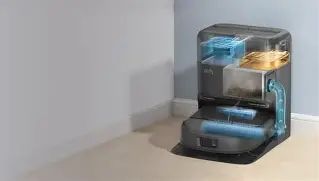
Physically, the Omni C28 follows the contemporary robot vacuum aesthetic: round chassis, sensor tower (if using LiDAR), and a low center of gravity to slip under sofas and beds. The docking station is noticeably larger than a simple charging dock because it integrates automated dust handling and, in the variant that includes it, water tanks and mop-washing mechanics. Buyers should measure the footprint before planning placement.
Materials and fit/finish are in line with mid-to-upper-tier consumer robotics: sturdy plastics where weight matters, a removable top cover for access to the dustbin and brush, and modular components intended for replacement rather than repair. The docking station uses enclosed compartments to contain dust and moisture; this design reduces airborne dust during self-emptying cycles — an advantage for allergy sufferers.
Navigation and mapping performance
The Omni C28 uses a modern navigation stack that typically combines LiDAR-based mapping with inertial sensors and bump-detection fallback. In practice this means:
- Reliable room mapping and multi-floor map storage, enabling tailored cleaning for each floor.
- Predictable pathing for efficient coverage on open-plan layouts and careful obstacle negotiation in cluttered spaces.
- Support for virtual boundaries and no-go zones through the app, helpful for protecting fragile décor or keeping the robot out of pet bowls/cords.
In real-world use, navigation quality determines average cleaning time and whether the robot repeatedly gets stuck. The Omni C28 is designed to avoid common failure modes — it finds charging docks, negotiates thresholds, and returns for recharging as needed — but performance will vary with home layout and clutter levels.
Cleaning performance in real homes
How well the Omni C28 cleans depends on flooring mix, home occupants, and cleaning habits. Here are the common scenarios buyers encounter:
Pet households
Pet owners care about hair removal, allergen containment, and the frequency of maintenance tasks like emptying hair from brushrolls. The Omni C28’s combination of strong suction modes and a self-emptying dock reduces the need to touch hair-filled dustbins weekly. However, hair can still wrap around brush bearings and axles — routine brush cleaning remains necessary for long-term optimal performance.
Shop the latest Electronics picks on Amazon.
View Offers →Homes with mixed flooring (carpets and hard floors)
The robot is optimized for day-to-day maintenance rather than heavy-duty deep-cleaning of clogged rugs. It performs well on low- to medium-pile carpets and excels at picking up crumbs and debris from hard floors. The mop function helps with light mopping and removing dry soil, but buyers who need intensive stain removal may still require a traditional mop or spot treatment.
Allergy and dust control
Self-emptying docks that store dust in sealed bags or canisters reduce direct exposure to dust when compared to manually emptying the onboard bin. For allergy sufferers, this is a significant convenience. Buyers should confirm filter type (HEPA-grade vs. basic) and maintain replacement schedules to preserve filtration performance.
Noise and daily disruption
High-suction modes and self-clean cycles create noticeable noise; daytime operation is common, but overnight or during focused work-from-home hours some buyers might prefer scheduling the robot for periods of lower occupancy. The dock’s auto-empty cycles are short but higher in frequency if the robot runs daily in heavy-dirt environments.
App, smart home integration, and usability
The Eufy app (or the dedicated companion app for the Omni line) provides the main control surface: map editing, zone cleaning, scheduling, and firmware updates. Typical strengths and practical behaviors include:
- Easy zone cleaning setup: define rooms or draw rectangles for spot jobs.
- Multi-map management for homes with more than one floor.
- Integration with Alexa and Google Assistant for voice-triggered cleaning cycles.
- OTA updates that add features or fix navigation edge cases over time.
One practical note: app responsiveness and the clarity of map editing tools vary by manufacturer. For households that value precise virtual boundaries (pet areas, children’s play zones), verify that the app supports fine-grained control and persistent map saving.
Maintenance and consumables
Long-term ownership costs include replacement filters, brushrolls, dust bags (if the dock uses them), and mop pads. The Omni C28’s value proposition is stronger when wear parts are reasonably priced and easy to source. In practice:
- Monthly cleaning of brushrolls and filters keeps performance steady and prevents motor strain.
- Dock dust bag or canister replacement frequency depends on home size and pet density; typical households will change bags every few months if the robot runs daily.
- Mop pads may be machine washable; check compatibility with replacement pads and whether Eufy or third parties sell approved parts.
Pros & Cons
- Pros:
- Convenience of a self-emptying dock reduces routine interaction.
- Solid navigation and multi-floor mapping for consistent coverage.
- Good day-to-day performance on hard floors and low to medium pile carpets.
- Smart scheduling, zone control, and voice assistant compatibility.
- Design reduces airborne dust during emptying — a plus for allergy-prone homes.
- Cons:
- Dock footprint is large and requires dedicated floor space.
- Brush hair entanglement still requires periodic manual cleaning.
- Mop function is suitable for maintenance mopping but not for heavy stain removal.
- Self-empty and mop-wash mechanics add complexity and potential maintenance points.
- Higher initial price than basic robot vacuums — buyers must weigh hands-off convenience versus cost.
Comparison with similar robot vacuum systems
For shoppers evaluating options, it helps to see how the Omni C28 stacks up against typical competitors in the integrated vacuum + dock category. The table below highlights functional comparisons rather than specific model-year claims. Price ranges and manufacturer features evolve quickly; use this as a decision-making framework rather than an exhaustive spec sheet.
| Feature | Eufy Omni C28 | Roborock S-series (e.g., S8 family) | Ecovacs Deebot X-series |
|---|---|---|---|
| Primary strength | Hands-off maintenance and sealed-dock convenience | Powerful suction and precision mop module | Comprehensive ecosystem with advanced dock functions |
| Navigation | LiDAR/SLAM with reliable room mapping | LiDAR with aggressive obstacle avoidance | LiDAR + camera options with strong mapping |
| Self-emptying & dock features | Self-empty; some variants add mop washing | Self-empty models available; dock size varies | Self-empty + mop wash in higher-tier docks |
| Mopping capability | Maintenance mopping and optional wash | Advanced vibrating mop and water control | Robust mopping and suction management |
| Best for | Buyers who want low-touch maintenance | Users prioritizing suction and deep cleaning | Households wanting an all-in-one docked solution |
| Typical trade-off | Dock complexity vs. convenience | Loud high-power modes and maintenance needs | Higher upfront cost for premium docks |
Value analysis: Is it worth the price tag?
Evaluating value depends on household priorities. The Omni C28 is priced and positioned for buyers who value:
- Reduced hands-on maintenance: If spending time emptying bins and washing mop pads is a deterrent, the dock's automation may justify a higher purchase price.
- Regular daily cleaning: Families with kids or pets that produce consistent debris will benefit from fewer manual interventions.
- Allergy considerations: Sealed docking and dust containment make it more attractive for allergy-sensitive households.
On the other hand, budget-conscious buyers or those with small spaces and light cleaning needs may find less value in paying for sophisticated docks. Similarly, households that prefer occasional deep cleans with traditional vacuuming may not need the Omni C28’s full feature set.
Buying guide: How to decide if the Omni C28 is right for you
Use this checklist to evaluate whether the Omni C28 meets your needs. These practical questions reflect what most buyers care about in the decision process.
Find top-rated Electronics products at great prices.
Shop Amazon →Home layout and floor types
Measure your home layout and consider clutter levels. The robot navigates well in mapped, unobstructed environments. If most floors are hard surfaces with a few area rugs, the Omni C28 delivers high value. Very high-pile carpets or homes with many tight corners may reduce its relative advantage.
Household occupants
Pets and children increase the frequency of cleaning. Ask: do you want the robot to run daily with minimal interaction? If yes, the dock’s self-emptying and mop-wash convenience can be a major time-saver.
Space for the dock
Confirm that the base can be placed against a wall on a flat surface with enough clearance. The dock is larger than a standard charger and needs accessible power and room for dust bag replacement.
Noise tolerance and scheduling preferences
Decide when the robot should operate. If noise is a concern during work hours or sleep, plan schedules accordingly. Many buyers set daytime cleaning windows or use “quiet” modes for occupied hours.
Maintenance willingness
Although the Omni C28 reduces daily maintenance, periodic checks are still required: brush cleaning, filter changes, and dock servicing. Confirm that replacement parts are available and affordable in your region.
Smart home ecosystem
If voice control or integration with existing smart-home routines matters, verify compatibility with Alexa, Google Assistant, or other platforms. The app should support multi-map and no-go line editing for flexible control.
Practical tips for new owners
- Clear obstacles and secure loose cables before first use; this improves mapping speed and reduces entanglement events.
- Establish no-go zones near delicate furniture, pet bowls, or stairs until the robot has learned reliable paths.
- Schedule regular maintenance checks for the brush and filter to avoid gradual performance degradation.
- Use the app’s mapping features to label rooms and save cleaning preferences — it speeds up routine use.
- If the dock includes a mop wash, follow manufacturer guidance on water treatment and detergent usage to avoid damaging pumps or de-scaling components.
Conclusion
The Eufy Omni C28 targets buyers who want more convenience from their robot vacuum — especially those who want to minimize daily chores like bin-emptying and mop maintenance. Its navigation, app control, and self-maintenance features make it a strong contender in the mid-to-upper tiers of consumer robot vacuums. The core trade-off is cost and dock complexity: buyers must decide whether the hands-off convenience and allergy-friendly design justify a larger initial investment and a bigger dock footprint.
For families with pets, busy households, or anyone seeking to reduce time spent on routine floor care, the Omni C28 offers clear practical benefits. For minimal-cleaners, small apartments, or strict budget shoppers, a simpler robot may provide better cost-to-value. Ultimately, the Omni C28 is compelling when hands-off cleaning and low exposure to dust are priorities — it is less compelling when the priority is the absolute lowest price or the deepest possible carpet cleaning on demand.