Don't Buy Until You Read This: Innocn 27 Ga27W1Q 4K Monitor vs Nvidia In 2025 Year In
Introduction
Buying a new monitor in 2025 means balancing raw hardware capability and a rapidly evolving graphics and display ecosystem. The INNOCN 27 Ga27W1Q arrives as a bold example of what modern 27-inch displays can offer: 4K resolution, a fast refresh rate, and an OLED/QD-OLED type panel designed to appeal to both competitive gamers and creative professionals. At the same time, Nvidia’s 2025 platform-level developments—drivers, adaptive-sync technologies, AI-driven upscaling and frame generation, and system-level latency improvements—have changed what buyers should expect from a monitor. This article examines the Innocn GA27W1Q in practical detail, then places it into the context of Nvidia’s 2025 advances so readers can decide whether this monitor will deliver the experience they need.
What the INNOCN 27 Ga27W1Q Offers
Quick overview
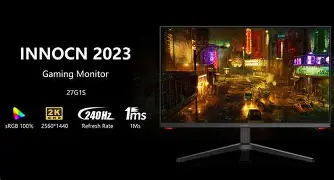
The INNOCN 27 Ga27W1Q is a 27-inch 4K display using QD-OLED technology. It targets users who want the color richness and deep contrast of OLED with the high refresh rates that competitive gaming demands. Key hardware highlights include a 3840×2160 resolution, an advertised 240Hz maximum refresh rate, extremely low response times, a wide color gamut, and modern connectivity (multiple DisplayPort/HDMI inputs and USB-C with power delivery). Mechanically, the monitor typically includes a fully adjustable stand and VESA mount compatibility, and it ships with standard features such as on-screen menus, basic integrated audio, and an adjustable bias lighting feature on some retail models.
Official-spec style snapshot
- Panel: 27-inch QD‑OLED (Quantum Dot-assisted OLED)
- Resolution: 3840 × 2160 (4K UHD)
- Refresh rate: Up to 240Hz (variable depending on input and GPU)
- Response time: Very low (advertised in microseconds / sub-millisecond GtG)
- Color: Wide gamut coverage (high DCI‑P3 percentage) and 10‑bit support
- HDR: HDR support (typical certification in the mid-range HDR class)
- Connectivity: HDMI 2.1, DisplayPort 1.4, USB‑C (video + up to 65W PD), USB hub, 3.5mm audio out
- Ergonomics: Height, tilt, swivel, pivot, VESA 100×100 mounting
Nvidia in 2025: The Platform Context
When a buyer compares monitors today, it is no longer sufficient to look only at panel specs. Nvidia’s 2025 feature set—composed of driver-level low-latency optimizations, adaptive-sync compatibility (G‑SYNC and broadly compatible VRR), and increasingly capable AI systems for upscaling and frame generation—changes how monitors gate performance. In short, the monitor is only one half of the experience; the GPU and driver stack are the other.
Key platform items that matter for display buyers in 2025 include:
- VRR and latency optimizations: Adaptive refresh technologies continue to reduce tearing and lower perceived latency in supported titles and systems.
- AI upscaling and frame generation: Upscaling (DLSS and equivalents) allows high-resolution output with reduced GPU strain; frame generation can effectively double perceived frame rate in some titles when used judiciously.
- Driver-level color and HDR pipeline: Better HDR tone-mapping and color handling reduce inconsistency between applications and ensure HDR displays behave predictably.
- Encoder/streaming improvements: Integrated NVENC/NVDEC and software improvements benefit streamers who use the monitor as part of a content-creation rig.
Detailed Analysis: Use Cases and Real-World Performance
Below is a breakdown of how the Innocn GA27W1Q and Nvidia’s 2025 ecosystem combine in the real world across typical buyer scenarios.
Competitive gamers (FPS, esports)
Competitive players care most about low motion blur, minimal input latency, and consistent high frame rates. The GA27W1Q’s high refresh rate and low response time give it an advantage over many 60–144Hz 4K displays. However, the final experience depends heavily on the GPU’s ability to sustain high frames at 4K and whether Nvidia features like low-latency drivers and frame-generation are enabled and tuned. With a modern Nvidia GPU and careful settings (FPS targets, upscaling enabled where appropriate), players can enjoy smoother motion while retaining 4K fidelity.
Creative professionals (photo/video editing, color work)
Color accuracy, contrast, and HDR behavior are priorities. QD‑OLED provides excellent contrast and saturated colors that are attractive for photo editing and grading. Buyers should verify factory calibration or plan for calibration with a colorimeter. Nvidia’s color pipeline in 2025 helps software-level HDR handling, but for professional color-critical work, a well-calibrated monitor and LUT support remain essential.
Console players and mixed-device households
Console owners will appreciate HDMI 2.1 support for features such as 4K120 or VRR signaling (depending on console support). The GA27W1Q’s multiple HDMI inputs and low-latency panel make it a practical choice as a hybrid PC/console display. Nvidia’s platform improvements won’t directly affect console behavior, but cross-device compatibility and consistent VRR performance make the monitor more future‑proof.
Discover deals on Laptops & Computers — updated daily.
View Offers →Streaming and content creation
Streamers benefit from a combination of a high-quality display and GPU-side encoding support. The GA27W1Q’s resolution and color fidelity are ideal for monitoring final output, while Nvidia’s encoder and software ecosystem in 2025 help streamers capture high-quality streams with lower CPU usage.
Pros & Cons
INNOCN 27 Ga27W1Q — Pros
- Excellent contrast and deep blacks typical of OLED-based technologies
- 4K resolution on a 27-inch canvas for very sharp imagery
- High refresh rate (up to 240Hz) ideal for fast-paced gaming
- Wide color gamut and 10-bit support for richer colors
- Modern connectivity (HDMI 2.1, DP, USB‑C with power delivery)
- Adjustable stand and VESA mount options for ergonomic setups
INNOCN 27 Ga27W1Q — Cons
- OLED panels carry an inherent risk of image retention/burn‑in under worst-case usage patterns
- True sustained 240Hz at 4K requires a very powerful GPU—often from the latest generation
- HDR peak brightness on OLED can be lower than the very brightest mini‑LED LCDs, impacting highlight pop in some scenes
- Calibration out of the box may be inconsistent; professional users will want to calibrate
Nvidia (2025) — Pros
- Platform-level advances reduce visible latency and improve VRR handling
- AI upscaling and frame-generation can make 4K targets attainable on fewer GPUs
- Improved HDR, driver-level polishing, and capture tools make life easier for creators
- Backward and forward compatibility with many monitors through software updates
Nvidia (2025) — Cons
- Some AI features work best in titles optimized by developers—results vary across games
- Frame generation and upscaling sometimes introduce micro-stuttering or interpolation artifacts in certain scenes
- Platform benefits require a relatively recent GPU to realize fully
Comparison Table: INNOCN 27 Ga27W1Q vs. Nvidia 2025 Platform
| Category | INNOCN 27 Ga27W1Q (Hardware) | Nvidia in 2025 (Platform/Software) |
|---|---|---|
| Primary role | 4K QD-OLED monitor for gaming and color work | GPU drivers, upscaling, frame generation, and VRR ecosystem |
| Performance cap | 240Hz panel limit; actual frame delivery depends on GPU | Can raise effective frame rate via frame generation and lower perceived latency |
| Color & HDR | Deep blacks and wide gamut; HDR performance excellent in contrast, highlight brightness moderate | Improves HDR tone mapping and color pipeline across applications |
| Compatibility | HDMI 2.1/DP/USB-C ensures broad device support | Works best with recent Nvidia GPUs and up-to-date drivers |
| Use case best fit | Gamers wanting 4K+high refresh; creators wanting contrast-rich panel | Gamers and creators who leverage upscaling, frame gen, and NVENC features |
| Limitations | Burn-in risk, needs a powerful GPU for sustained 4K/240Hz | Works unevenly across all games; requires modern GPU |
Buying Guide: What to Check Before You Buy
Choosing the right display is a question of priorities. Use this checklist to align the GA27W1Q with a buyer’s real needs and the capabilities of their system.
1. Define your primary use case
Competitive FPS players prioritize frame rate and latency; content creators prioritize color accuracy and HDR behavior; console players look for low-latency 4K/120 and VRR support. Decide which bucket matters most and evaluate whether a 4K 240Hz QD-OLED is overkill, perfectly matched, or insufficient.
2. Verify GPU capability
4K at high frame rates is GPU-intensive. For native high-frame 4K gaming, only top-tier GPUs will sustain consistent 120–240 fps in modern titles. However, Nvidia’s 2025 upscaling and frame generation features can enable higher perceived frame rates on less powerful hardware—test those features (or read tested examples) before assuming native performance.
3. HDR and brightness expectations
QD‑OLED panels excel at contrast but may not reach peak brightness levels of the brightest mini‑LED panels. If highlight pop (e.g., sun glints, specular highlights) is a top priority, compare HDR peak brightness measures and real-world HDR tests rather than relying solely on certification names.
4. Burn-in and usage patterns
OLED-based panels carry burn-in risks when static elements persist for long periods (HUDs, UI bars). Buyers who stream, keep static toolbars open for hours, or run 24/7 dashboards should consider panel longevity strategies: use pixel-shift features, screensavers, varied content, and vendor warranty terms.
5. Connectivity and peripherals
Confirm the monitor’s ports match intended devices. USB‑C with 65W power delivery can simplify a laptop-only setup. Multiple HDMI inputs help if a console and PC will be used. Ensure you have cables that properly support desired bandwidth (HDMI 2.1-certified cables for 4K120+ features).
Looking for the best Laptops & Computers deals on Amazon?
See Deals →6. Calibration and color workflow
Creative work benefits from hardware or software calibration. Check for factory calibration reports, out-of-the-box delta-E values if available, and the monitor’s compatibility with calibration tools and LUTs. Consider whether you need a hardware LUT or whether software color management suffices.
7. Ergonomics and desk fit
Measure desk depth: 27-inch 4K monitors can feel large, and height/tilt adjustments combined with VESA compatibility are important to get a comfortable viewing position. Also account for the monitor’s stand footprint and cable routing.
8. Warranty and after-sales support
Warranty terms for OLED panels can differ by manufacturer and region. Double-check how the vendor handles image retention and defective pixels—especially for OLED where policies may include burn-in coverage clauses or limited replacement windows.
9. Reviews and independent tests
Before committing, read independent reviews focusing on real-world gaming latency tests, color measurements, HDR testing, and long-term reliability feedback. Pay close attention to testing conducted with the same GPU family you will use.
Practical Tips for Getting the Most Out of This Combination
- Enable platform features selectively: Use Nvidia’s upscaling and frame generation where they preserve image quality and reduce load; disable when artifacts appear.
- Use in-game overlays sparingly: Too many static HUD elements increase the risk of image retention on OLED panels.
- Keep drivers and firmware updated: Both GPU drivers and monitor firmware receive improvements that can refine VRR, HDR handling, and compatibility.
- Calibrate for content creation: Buy or borrow a colorimeter and run a calibration if color accuracy is mission-critical.
- Match cables to capability: Use cables rated for the signal you want (e.g., HDMI 2.1 cables for 4K120+ and VRR).
Conclusion
The INNOCN 27 Ga27W1Q represents a compelling mid-size 4K option for buyers who want OLED-style contrast with high refresh rates. It is particularly attractive to users who want sharp 4K visuals plus the responsiveness of a high-refresh panel. However, its strengths are unlocked best when paired with a modern GPU and a robust platform like Nvidia’s 2025 ecosystem—drivers, adaptive-sync compatibility, and AI features materially affect the real-world experience. Prospective buyers should weigh their primary use case, ensure GPU compatibility for sustained performance, and consider the trade-offs inherent in OLED panels (notably burn-in risk and HDR peak brightness).
For competitive gamers who rely on the highest possible frame rates, the monitor’s 240Hz capability is promising but contingent on using Nvidia tools and hardware to bridge the gap between native frame rates and perceived smoothness. For creators, the panel’s contrast and color depth are a strong match for grading and visual work, but calibration is recommended. Ultimately, the monitor plus Nvidia’s 2025 platform make a powerful combination for freedom between fidelity and speed—buyers should confirm real-world tests for their primary applications before purchase, calibrate when necessary, and adopt usage patterns that protect OLED longevity.