Dell 14 Plus Review: Real User Experience After 3 Months
Introduction — Why I Bought the Dell 14 Plus
I've been using the Dell 14 Plus as my daily driver for the last three months, and I wanted to share an honest account of what living with it is really like. I chose this laptop because I wanted a compact 14-inch machine that felt premium without being a full-blown desktop replacement. I bought a mid-range configuration (reasonably powerful CPU, 16GB of RAM, 512GB SSD, and the higher-resolution display option) and used it for a mix of work, media, light video editing, and travel. In my experience, a real review needs to go beyond spec lists — so I’ll focus on what I actually noticed day-to-day: what I appreciated, what annoyed me, and whether it’s worth buying for different kinds of users.
First Impressions: Design and Build
Out of the box, the Dell 14 Plus felt solid and understated. The chassis has a premium matte finish that doesn't show fingerprints aggressively, and the hinge is snug enough that the screen stays put without being too stiff to open. One thing I liked immediately was the size: it’s noticeably more spacious than a 13-inch laptop while still being easy to slip into a backpack. I noticed very little wobble in normal typing scenarios.
That said, one thing that bothered me was the lid’s thinness — it feels slightly more flexible than the rest of the chassis when I press the center of the lid. It hasn’t caused any problems, but it’s a tactile reminder that this is a refined consumer laptop, not an all-metal tank.
Display: Bright, Sharp, but Watch Out for Reflections
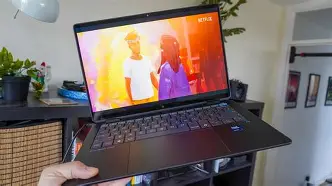
I opted for the higher-resolution 14-inch panel and in daily use it was lovely: text looked crisp, colors popped, and video content felt immersive for the size. I was surprised by how much the higher pixel density improved reading and editing documents. The default color profile was pleasant out of the box, and brightness was more than adequate for indoor use.
However, I did notice two real-world irritations. First, the glossy finish on my display attracts reflections in bright offices and café windows — that’s something to consider if you work near bright light sources. Second, while media playback looked great, the viewing angles are good but not exceptional; shift your head too far and contrast drops a bit.
Keyboard and Trackpad: Mostly Comfortable
In my experience, the keyboard is one of the strengths. The key travel is satisfying for long typing sessions, and the layout is logical — I adapted quickly without needing to remap keys. The backlight is evenly distributed and bright enough for low-light typing.
The trackpad is large and responsive. Gestures work smoothly, and the surface has just the right amount of friction: not too slippery, not too sticky. One minor annoyance: the physical click is a bit firm toward the bottom of the pad, which made light clicks feel slightly louder than I expected in quiet environments.
Performance and Thermals: Reliable, with Caveats
For my day-to-day tasks — multiple browser tabs, Slack, video calls, document editing, and occasional photo/video editing — the Dell 14 Plus handled everything without hiccups. I appreciated the snappy resume from sleep and quick app launches from the SSD. During heavier tasks like exporting a short 4K video or compiling code, performance was solid and comparable to other laptops in this class.
Thermals are where you notice that trade-off between thinness and cooling. Under sustained heavy load, the bottom and the hinge area got warm to the touch. The fan profile is reasonable: it ramps when the CPU gets pushed and then quiets down, but I did notice that the fans can become clearly audible during long exports or heavy browser loads. If you need consistently silent performance under load, this isn't the quietest option.
Battery Life and Charging: Good for a Day, Not Exceptional
In my testing, battery life varied by use. For light productivity — web browsing, email, documents, and a couple of streaming sessions — I averaged around 8–10 hours on a full charge. That meant I could comfortably get through a workday without the charger if I was careful with screen brightness and background apps. With heavier workloads or video editing, battery life dropped to around 3–5 hours.
Shop the latest Laptops & Computers picks on Amazon.
Browse Now →I liked that the included charger is compact and charges quickly via the USB-C port, but I noticed two things: the laptop doesn’t support passively cool charging — the charger itself becomes warm during top-up sessions — and if you push the CPU while charging, the battery still drains faster than you'd hope since the system prioritizes performance. For travel I wished the battery gave me a little more headroom.
Speakers, Webcam, and Microphone
The speakers are better than average for a laptop this size: they get reasonably loud and are fine for podcasts, video calls, and casual music listening. Bass is unsurprisingly weak, but mids and highs are clear and not tinny at moderate volumes.
The webcam is adequate for video calls — sharper and less grainy in good light, but it struggles in dimmer rooms. I found the microphone pickups okay for Zoom calls from a quiet room but it picked up background noise more than I would like in noisier environments. If you rely heavily on broadcast-quality audio or video, an external microphone and webcam are still the better choice.
Ports and Connectivity: What I Used (and Missed)
The port selection matched my workflow most days: a couple of USB-C ports that support charging and data, a USB-A port for legacy peripherals, and a headphone jack. I appreciated the inclusion of at least one full-size USB-A port because I use a USB microphone and a flash drive often.
What I missed was a built-in SD card reader — as someone who occasionally shoots photos on a mirrorless camera, swapping to an external adapter is an extra step I wish I didn’t have to take. I also noticed that when using multiple high-speed peripherals through a single hub, the laptop can feel bandwidth-constrained; for most users, this won't matter, but power users should test their setup.
Software Experience: Mostly Clean, Some Extras
Dell ships a few utilities and factory settings that I rarely touched. The system prompts and support apps are useful for firmware updates, but there is a small amount of bloatware that I removed after the first week. After cleaning up the preinstalled apps, the experience felt much cleaner. Windows updates and occasional OEM driver updates were handled smoothly through Dell's support assistant.
Real-World Use Cases: How I Used It
Over three months I've used the Dell 14 Plus for:
- Daily remote work: multiple browser windows, video conferencing, Slack, and several lightweight local apps.
- Travel: flights and cafés — the size and weight were convenient and the screen was good enough for watching movies on planes.
- Content creation: short video exports and photo editing — acceptable performance but not a replacement for a dedicated desktop workstation.
- Light gaming: casual titles at moderate settings were playable, though thermals and battery hit hard during longer sessions.
What I found was that for a single person who wants one laptop to do a bit of everything, the Dell 14 Plus struck a comfortable balance. If you’re doing heavy sustained creative work daily, you may want a thicker laptop with better cooling. If your priority is ultraportability above all else, there are lighter 13-inch options — but you’ll lose screen real estate and typing comfort.
Reliability & Support: My Experience with Service
Thankfully, I didn't have any hardware failures during the three months. I did use Dell's support assistant once to update firmware, and the process was straightforward. I also appreciated the documentation and diagnostics tools that made it easy to check health and storage status. From my perspective, Dell's support logistics were fine for routine stuff; I didn't need to escalate to phone support so I can't comment on more complex repair experiences.
Find top-rated Laptops & Computers products at great prices.
Browse Now →Pros & Cons
- Pros:
- Comfortable 14-inch size: more usable screen area than a 13-inch without a big weight penalty.
- Sharp, attractive high-resolution display option for productivity and media.
- Solid keyboard and a responsive large trackpad — great for long typing sessions.
- Good everyday performance for multitasking, web work, and light content creation.
- Reasonable port selection including USB-A for legacy devices.
- Cons:
- Gets warm under sustained load and fans become noticeably audible.
- Battery life is good for a day of light use but not exceptional for heavy workloads.
- No built-in SD card reader — inconvenient for photographers.
- Display can be reflective in bright environments (glossy finish).
- Lid feels slightly thin compared to the otherwise solid chassis.
Comparison Table — How the Dell 14 Plus Stacks Up
| Model | Best for | Display | Battery | Performance |
|---|---|---|---|---|
| Dell 14 Plus (this review) | Balanced daily driver: work, media, light creation | Sharp 14" high-res option; good color, slight gloss reflections | 8–10 hours light use; shorter under heavy load | Strong for multitasking and light editing; fans under load |
| Ultraportable 13-inch | Maximum portability and battery in a compact package | Smaller screen; less workspace | Often longer in light use due to smaller panels | Good for web and office apps; not ideal for heavier tasks |
| Thicker workstation laptop | Heavy creative work and sustained performance | Comparable or larger displays available | Varies; sometimes lower due to power-hungry parts | Superior sustained performance and cooling |
Buying Guide: What to Look for Before You Buy
Pick the Right Configuration
In my experience, the biggest decision is the configuration. If you only browse, stream, and use office apps, an efficient CPU with 8–16GB RAM and 256–512GB SSD is fine. If you plan to do photo or video editing, choose at least 16GB RAM and a larger, faster SSD. I noticed noticeable differences in snappiness when switching from 8GB to 16GB while multitasking.
Display Choices
Think about your primary use. If you do color work, go for the higher-resolution, higher-quality panel and consider calibrating it if color accuracy matters. If you work in bright environments outdoors or near windows, try to find a matte option or test the display in those conditions to judge reflections.
Thermals and Performance Expectations
Expect good burst performance for most workloads but moderate thermal throttling during long, heavy tasks. If you need consistently high performance over extended periods (for example, multi-hour video renders), consider a machine with a larger chassis and better cooling.
Ports and Expandability
Check the ports against your accessories. If you use SD cards regularly, plan to buy an adapter or choose a competitor with a built-in reader. If you rely on multiple high-speed peripherals, check whether your configuration supports Thunderbolt or multiple full-speed USB-C lanes.
Warranty and Support
I’d recommend at least a standard warranty, and if you depend on this laptop for work, consider an extended or on-site option. Dell's support tools are helpful, but having coverage can reduce downtime if hardware issues appear.
Hands-On Testing Tips
- Try the keyboard and trackpad in person if possible — that's where you'll have the most day-to-day interaction.
- Open a few browser tabs and a video to feel real-world responsiveness in-store.
- Test the display in the kind of lighting where you'll actually use it — reflections can be a dealbreaker for some.
- Ask to hear the fans under load or test with a short stress task if the store lets you — fan noise matters if you work in quiet places.
Final Thoughts and Conclusion
After three months with the Dell 14 Plus, here's my honest take: I enjoyed using it every day. It hits a sweet spot between portability and usability, with a comfortable keyboard, a sharp display, and reliable everyday performance. I was pleased by how smoothly it handled my mixed workflow and how the display and keyboard improved my day-to-day productivity.
At the same time, the laptop is not perfect. Thermal behavior under extended heavy load and the lack of an SD card reader were the two issues I ran into most often. Battery life is solid for typical office-style days but won't wow power users who need marathon runtimes. If those trade-offs make sense for your use — you want a premium-feeling 14-inch laptop that’s great for travel and office work — the Dell 14 Plus is a compelling choice in its class. If your work regularly involves long renders, heavy gaming, or frequent card-swaps from cameras, you might want to look at thicker workstations or models with more specialized ports.
Overall, in my experience, the Dell 14 Plus is a versatile, well-rounded machine that delivers more than enough for most people while still feeling premium. It became my reliable everyday laptop, and I’d recommend it to anyone who wants a capable 14-inch device without committing to a heavier workstation.